Ask any South African about their favourite way to eat, and the word shisanyama will come up sooner or later. It is food, but it is also a weekend ritual, a meeting place and a celebration. If you are new to it, or you just want to know more about the tradition behind your Saturday platter, this guide covers the basics.
What does shisanyama mean?
Shisanyama comes from isiZulu and roughly means “burn the meat” or “burnt meat”. It describes both the style of cooking, meat grilled over an open fire, and the place where it happens. In many townships, a shisanyama started as a butchery with a fire outside: you chose your raw meat at the counter, handed it to the braai master, and ate it hot off the grill. Over time these spots became social hubs, with music, friends and long afternoons around the fire.
How is it different from a braai at home?
A home braai is something you host. A shisanyama is somewhere you go. Someone else tends the fire, the meat is cooked by people who do it all day, and you get to relax with friends or family. The atmosphere is half the experience: it is a place to catch up, celebrate and take your time.
What to order
Menus vary, but these are the classics you will find at most shisanyamas, including ours at Presto Bello Hub:
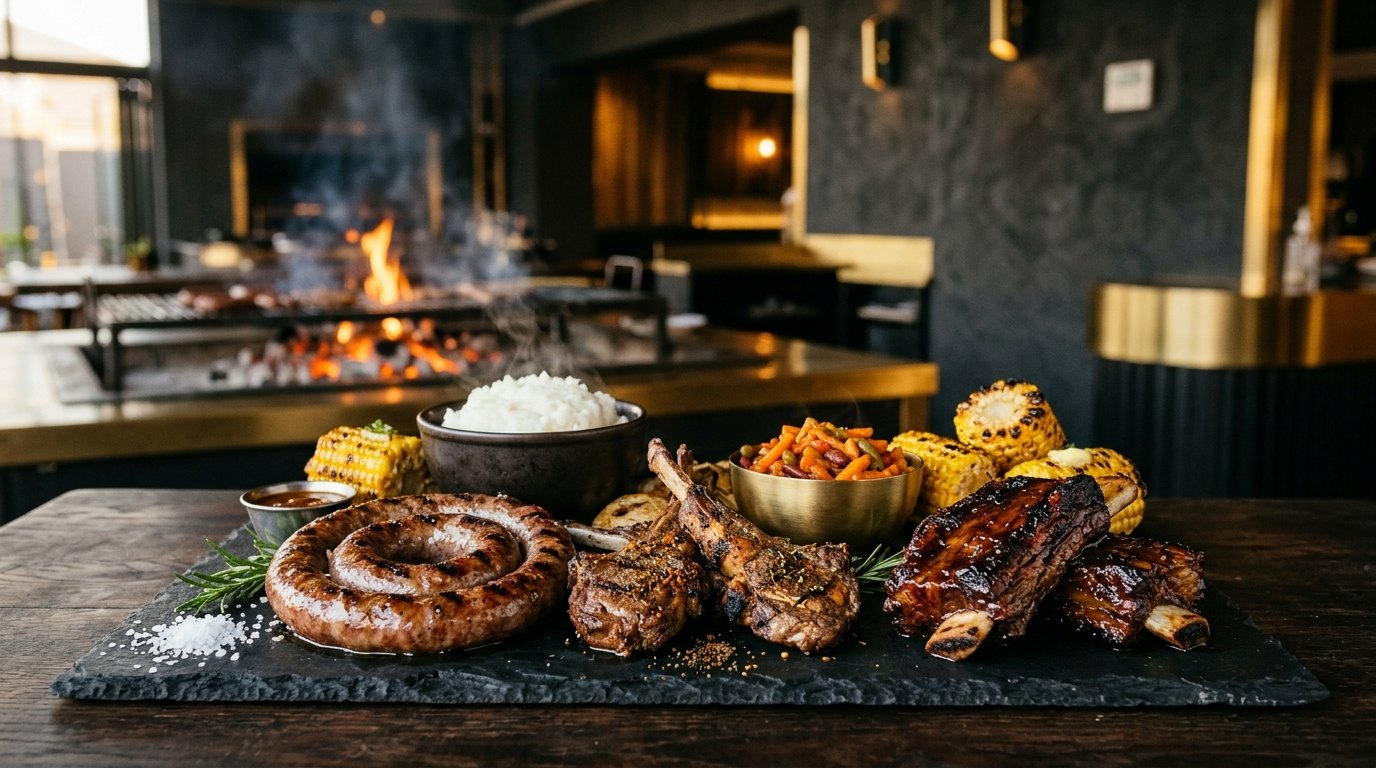
- Boerewors: the coiled South African farmer’s sausage, seasoned with coriander and spices and grilled until the skin snaps.
- Chops: grilled with a good char on the fat.
- Ribs: basted and grilled until sticky.
- Platters: a mixed board of meats, made for sharing with a group.
The sides that make it
No shisanyama plate is complete without the sides.
- Pap: maize meal porridge, served stiff (phutu or stywe pap) to scoop up meat and sauce with your hands.
- Chakalaka: a spicy vegetable relish, usually with beans, carrots, peppers, onions and tomato. Every cook has their own version.
- Salads and sauces: often a simple salad and a tomato and onion gravy.
How to eat it
Traditionally, shisanyama is eaten with your hands. Pinch off some pap, roll it into a ball, press a dent into it with your thumb, and use it to scoop up chakalaka or gravy alongside a bite of meat. Nobody will mind if you use a knife and fork, but try it the traditional way at least once.
Why it is a group meal
Shisanyama is built for sharing. A big platter in the middle of the table means everyone tries a bit of everything, and the meal stretches out as people keep picking. That is why it is the go-to for birthdays, family visits, work outings and stokvel get-togethers. If you are planning for a group, order a platter rather than individual plates.
Tips for your first visit
- Go hungry. Portions are generous.
- Order for the table. A platter is better value and more fun than single plates.
- Do not skip the pap and chakalaka. They turn grilled meat into a proper meal.
- Give it time. Good meat on a real fire is not fast food.
- Order ahead for big groups so everything comes off the fire together.
Shisanyama in Bergville
At Presto Bello Hub on the R74 in Bergville, our shisanyama serves flame-grilled boerewors, chops and ribs with pap, chakalaka and sides, plus platters for groups. You can eat in at the food court or take it away, and you can order ahead on WhatsApp so it is ready when you arrive. Find out more on our shisanyama in Bergville page.
Because the Hub is built around a drive-through car wash, you can drop your car off before you sit down. By the time the platter is finished, your car is clean. And if someone in your group is not in the mood for meat, our wood-fired pizzas and burgers are in the same food court.
The bottom line
Shisanyama is South African food culture at its most generous: good meat, a real fire, simple sides and people around a table. Whether you are a local or passing through on the way to the Drakensberg, it is one experience worth making time for.
Frequently asked questions
Is shisanyama the same as a braai?
The cooking method is similar, meat over an open fire, but shisanyama usually refers to a place where someone else does the grilling and you come to eat and socialise. A braai is typically something you host at home.
What is the difference between pap and phutu?
Both are made from maize meal. Stiff pap is firm enough to hold in your hand and scoop with. Phutu is drier and crumbly, often eaten with amasi or gravy. Ask what is being served on the day.
Is shisanyama only for meat lovers?
Meat is the star, but pap, chakalaka and salads mean there is usually something for everyone. At Presto Bello Hub, anyone who does not want meat can order from the pizza and burger side of the food court instead.
Can I order for a large group?
Yes. Platters are designed for sharing. Send us your numbers on WhatsApp in advance so the fire is ready for you.